


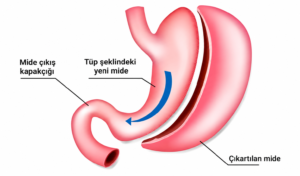
Mide bypass, midenizin ve ince bağırsağınızın işlevini değiştirerek, vücudunuzun yediğiniz yiyecekleri işleme şeklini değiştirir ve bu şekilde kilo vermenize yardımcı olur.
Ameliyat sonrası, mideniz küçülür ve bu sayede daha az yemek yiyerek kendinizi daha tok hissedersiniz. Yediğiniz yiyecekler, midenin ve ince bağırsağın bazı kısımlarına ulaşmaz, dolayısıyla vücudunuz yediğiniz yiyeceklerden tüm kalorileri almaz.
Ameliyat Nasıl Yapılır?
Gastrik bypass operasyonu genel anestezi altında gerçekleştirilir, bu sayede uyursunuz ve herhangi bir ağrı hissetmezsiniz.
Bu operasyon iki aşamada yapılır:
- Midenin Küçültülmesi: Cerrah, mideyi küçük bir üst kısma ve büyük bir alt kısma ayırmak için cerrahi zımba kullanır. Midenizin üst kısmı (kese olarak adlandırılır) yiyeceklerin depolandığı alandır. Bu kese yaklaşık ceviz büyüklüğünde olup, 28 gram civarında yiyecek alabilir. Bu küçültme, daha az yemek yiyerek kilo vermenize yardımcı olur.
- Bypass İşlemi: Cerrah, ince bağırsağınızın küçük bir bölümünü, mideye açılan küçük bir delikten bağlar. Yediğiniz yiyecekler bu yeni açıklıktan geçerek ince bağırsağa ulaşır. Sonuç olarak, vücudunuz yiyeceklerden daha az kalori emecektir.
Mide Bypass Ameliyatı Türleri
Mide bypass, iki şekilde yapılabilir:
- Açık Ameliyat: Cerrah, karnı açmak için büyük bir kesi yapar. Mide, ince bağırsak ve diğer organlara etki edilerek bypass yapılır.
- Laparoskopik Ameliyat: Diğer bir yöntem ise laparoskop adı verilen küçük bir kameradır. Laparoskopi, cerrahın midenizin içini küçük bir kamerayla incelemesini sağlar. Bu yöntemde:
- Cerrah, karın bölgesinde 4 ila 6 küçük kesi yapar.
- Bu kesiler aracılığıyla teleskop ve operasyonu gerçekleştirmek için gerekli olan aletler yerleştirilir.
- Kamera, bir video monitöre bağlanır ve cerrah, bu monitör aracılığıyla karnınızın içini izler.
Laparoskopik Ameliyatın Avantajları
Laparoskopik cerrahi açık ameliyata göre şu avantajlara sahiptir:
- Daha kısa hastanede kalış süresi ve iyileşme süresi.
- Daha az ağrı.
- Daha az yara izi ve fıtık veya enfeksiyon riski.
Bu operasyon genellikle 2 ila 4 saat sürer.
İlgili Tıbbi Hizmetler
Get in touch
Obesity